
Why We’re in Wyoming
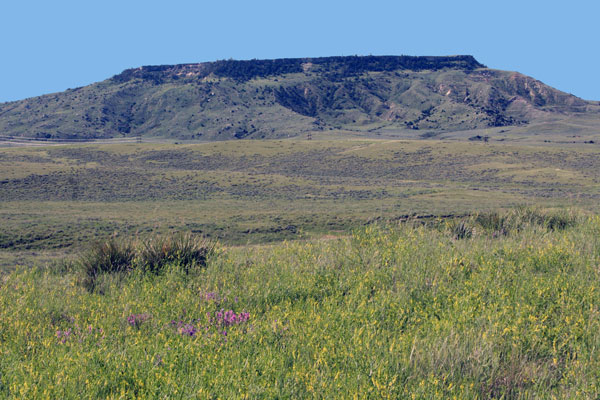
There are a number of factors that make Wyoming the perfect location for Emerald to pilot its gas farming project:
– Orphaned Coal Bed Methane (CBM) wells that Emerald and its GEM Tool could reactivate
– Historically productive CBM plays
– Favorable business climate
– Knowledgeable and available workforce on the ground
– Existing and under-utilized gas production, transportation, and sale infrastructure in place
But let’s take a longer view on CBM in Wyoming and show its significance.
Coal Bed Methane’s History in Wyoming Energy Development
CBM was actually the first truly unconventional oil and gas play. By the end of 1992, operators drilled and completed more than 3,000 CBM wells, beginning in the San Juan Basin of northwest New Mexico and southwest Colorado. The USGS estimates this CBM province may have up to 43 to 49 Trillion Standard Cubic Feet (TCF) of CBM in place.
Other biogenic CBM basins are the Black Warrior Basin of northern Alabama. Estimates place this basin’s coal-bed methane resource at approximately 20 TCF. It also has 2,700 producing wells covering 18,000 square miles.
Then there is the Powder River Basin of NE Wyoming. It contains over 8.2 TCF of CBM in place and has had over 27,000 wells drilled. Historical cumulative production to date exceeds 6.3 TCF.
Orphaned CBM wells in Wyoming
The graph below illustrates the adverse effects of sub-$3.00/mcf gas in NE Wyoming over the last 15 years (data from WOGCC). Note that vast quantities of CBM water production (barrels) exceed CBM gas production (MCF) in most of the years shown on the graph. Water and gas production continue to decline along a well-established downward trend.
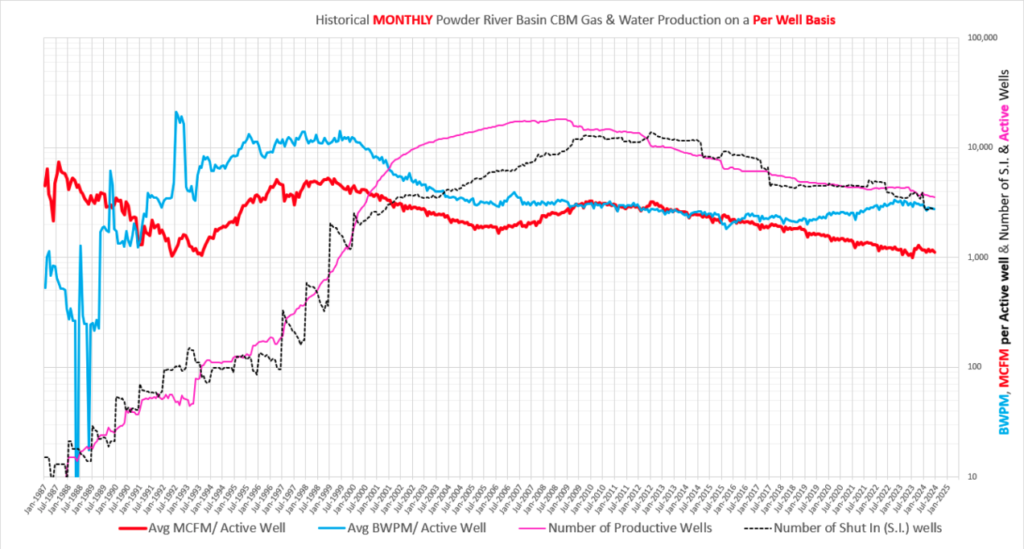
As of January 2025, there are 997 orphaned CBM wells in the Powder River Basin. The state of Wyoming handles the plugging of these wells. Plugged wells are available for reactivation by posting an “idle well” bond of $10 per foot of depth of the well, and also cleaning up any title/lease(s) issues.
Many of these wells connect to existing gathering and sales pipelines. Operators can reactivate these wells with relatively minor work.
Once production is re-established, the “idle well” bond can then be transferred to the next orphaned well to be reactivated. The vast majority of orphaned wells have some early subsurface and production data available for review. Operators can also “cherry pick” which wells to re-activate.
Other opportunities for energy development in Wyoming include acquiring pipelines and compression facilities to move gas to market. These operational prospects, along with Wyoming’s favorable business climate for gas production, make it an excellent investment candidate.
If you’d like more information on Emerald or Emerald’s activities, please contact us here.